Farmers can build soil health and access financial incentives by strategically integrating cover crops Utah dryland farming systems. Late summer planting maximizes biomass production to reduce erosion and increase organic matter; furthermore, producers can leverage carbon markets and government programs to improve their return on investment.
Growing grain in the high desert of Northern Utah often feels like a gamble against the sky, particularly when every inch of moisture dictates the viability of your harvest. You understand that your soil needs organic matter to sustain long term productivity, yet the persistent concern remains that a cover crop will simply compete for the scarce water your primary cash crop requires. This tension has historically forced growers to choose between immediate yield and soil health. Modern regenerative strategies and emerging federal incentives for 2025 have fundamentally shifted this landscape. In this analysis, we will examine how to implement specific drought tolerant mixes that enhance water retention, and we will detail the financial programs available to offset your risk. You will learn how to turn soil health into a measurable, paid asset for your dryland operation.
Understanding Cover Crops in the Utah Dryland Context
In the arid landscapes of Box Elder County and the broader Intermountain West, the definition of a cover crop shifts from a luxury to a strategic asset. While traditionally associated with high-rainfall regions like the Midwest, cover crops Utah dryland farming operations are increasingly adopting these practices to stabilize volatile yields. For decades, local rotations have relied on the fallow year to bank moisture for winter wheat and small grains. While the fallow tradition remains a cornerstone of dryland production, modern management suggests that bare soil often leads to erosion and carbon loss.
Implementing a cover crop during these periods allows growers to replace or enhance traditional fallow cycles with living roots. This shift represents a commitment to land stewardship, moving beyond the immediate harvest to focus on long term resilience. By carefully selecting species that fit our short growing seasons, we can protect the soil surface without necessarily depleting the deep moisture reserves required for the following cash crop. At Anders Farming, we view these practices as scalable solutions that address the unique challenges of Northern Utah soils. This is not a short term trend; it is a fundamental refinement of how we manage resource efficiency in one of the most demanding agricultural environments in the United States.
How to Get Paid: Carbon Credits and Federal Incentives for 2025 and 2026
Securing financial support for cover crops Utah dryland farming is no longer limited to abstract environmental goals; it is now a matter of navigating concrete payment structures for 2025 and 2026. Private carbon programs offer a predictable point of entry for growers looking for straightforward per-acre payments. The Bayer Carbon Program, for instance, provides approximately $6 per acre for the simple adoption of cover crops, whereas Indigo Ag offers a higher range between $15 and $20 per acre for verified practices. For operations that can demonstrate high sequestration potential, carbon credit markets currently pay between $25 and $40 per ton of carbon sequestered in the soil.
The most significant financial driver for Northern Utah operations, however, remains the USDA NRCS Environmental Quality Incentives Program (EQIP). This federal program provides direct financial assistance to implement conservation practices that improve soil health. In Utah, EQIP incentive rates are notably higher than most private markets, often reaching $50 to $75 per acre depending on the complexity of the seed mix and the specific resource concerns of the land. These funds are designed to offset the costs of seed, planting, and termination, making the transition to regenerative practices financially viable even during the initial learning curve.
Understanding the difference between single-source funding and 'stacked' incentives is critical for maximizing ROI. Stacking allows a grower to combine different types of financial support, such as state-level grants with federal EQIP funds. However, growers must be cautious with private carbon contracts. Many private buyers require 'additionality,' meaning they only pay for practices that are not already mandated or funded by other specific programs. Navigating these requirements requires a strategic approach to ensure you do not disqualify yourself from the most lucrative opportunities.
At Anders Farming, we view these incentives as essential scalable solutions that turn resource management into a legitimate revenue stream. By leveraging these 2025 and 2026 incentives, growers can mitigate the initial risk of moisture management while building long term soil equity. To determine which combination of programs fits your specific acreage and rotation schedule, Contact Anders Farming for a detailed assessment of available funding pathways.
The Moisture Dilemma: Solving the Biggest Challenge for Utah Growers
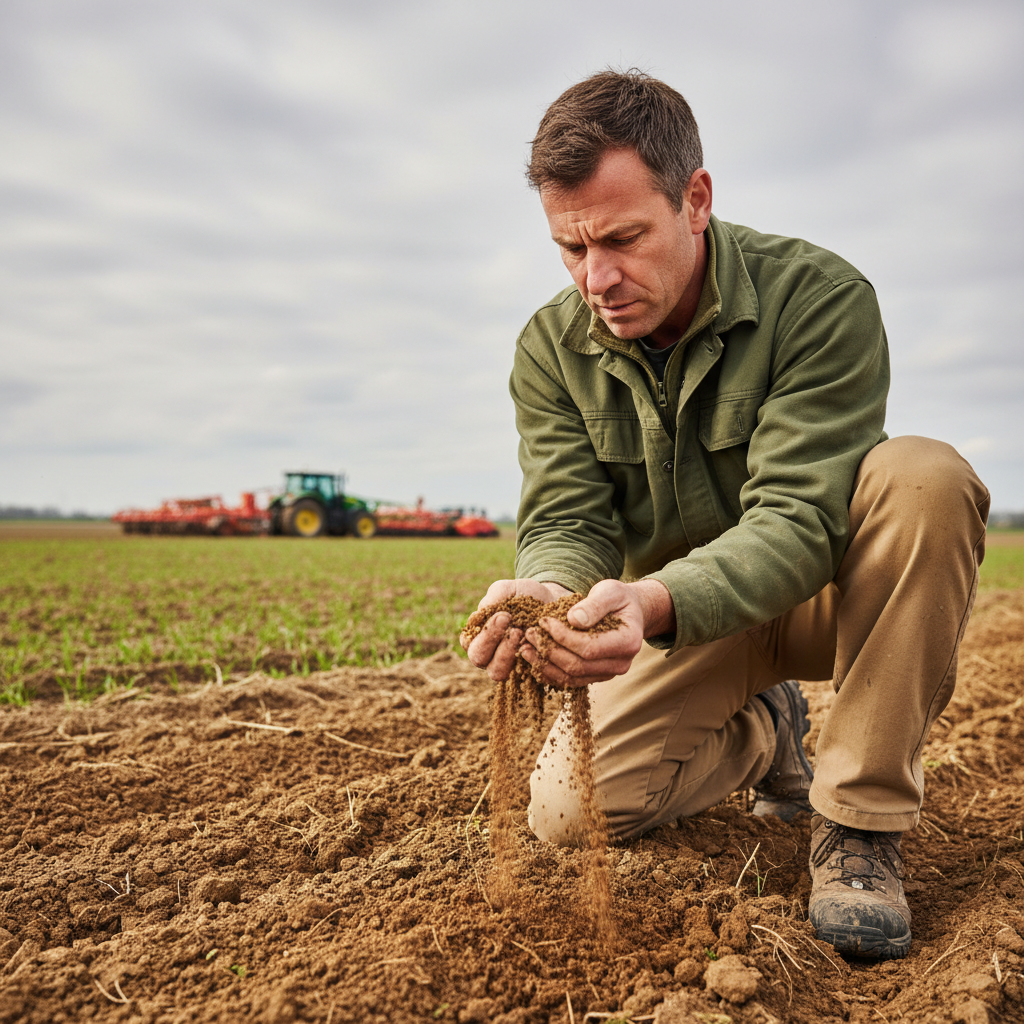
The primary hurdle for integrating cover crops Utah dryland farming into a profitable rotation is moisture management. Research from USU Extension and SARE indicates that while living roots provide essential soil benefits, they can act as a "water thief" if managed without precision. In the arid climate of Northern Utah, the moisture banked during a fallow year is the lifeblood of the following wheat crop. If a cover crop is allowed to grow too long, it will exhaust the deep water reserves, directly penalizing your cash crop yield.
Solving this dilemma requires strict adherence to termination windows. For most dryland systems in Box Elder County, terminating the cover crop in late spring or early summer is non-negotiable. This timing allows the plant to provide ground cover and root structure while leaving enough time for summer rains, however infrequent, to recharge the upper soil profile before fall planting.
Strategic biomass production depends heavily on the planting window. According to SARE study results, late-summer planted cover crops often struggle to produce significant biomass before the first killing frost. Conversely, spring-planted mixes can produce substantial organic matter, but they require much earlier termination to preserve the water necessary for the subsequent grain crop.
Balancing these factors is a core component of land stewardship that prioritizes the long-term health of the soil without sacrificing immediate productivity. At Anders Farming, we implement scalable solutions that utilize these specific termination windows to ensure your field remains a productive asset rather than a moisture deficit. If you are concerned about the specific water requirements of your acreage, Contact Anders Farming to discuss a customized termination schedule.
Selecting the Right Cover Crop Mix for Northern Utah Soils
Selecting a mix for cover crops Utah dryland farming requires matching seed characteristics to local soil texture. In Box Elder County, soil variability is high; therefore, a one size fits all approach fails. For the heavy clay soils frequent in the Bear River Valley, brassicas like tillage radishes are essential. Their deep taproots act as biological subsoilers, fracturing compaction layers without mechanical tillage. On sandier benches, the focus shifts to grasses. Species like cereal rye or oats provide the structural carbon necessary to stabilize soil and build organic matter in high drainage areas.
Understanding the functional differences between species is critical for long term success. Legumes, such as Austrian winter peas or vetch, prioritize nitrogen fixation, which can help offset synthetic fertilizer costs in later seasons. Conversely, grasses are the primary tool for erosion control and carbon building. These options are further categorized by planting windows. Warm season crops are typically planted in late spring for summer biomass, whereas cool season crops are suited for early spring or late fall planting to capitalize on shoulder season moisture. Implementing these scalable solutions allows for better land stewardship by tailoring biology to the specific needs of the acreage. To determine which species will thrive in your specific soil profile, Contact Anders Farming for a consultation on seed selection and equipment calibration.
Improving Soil Health and Organic Matter in Arid Climates
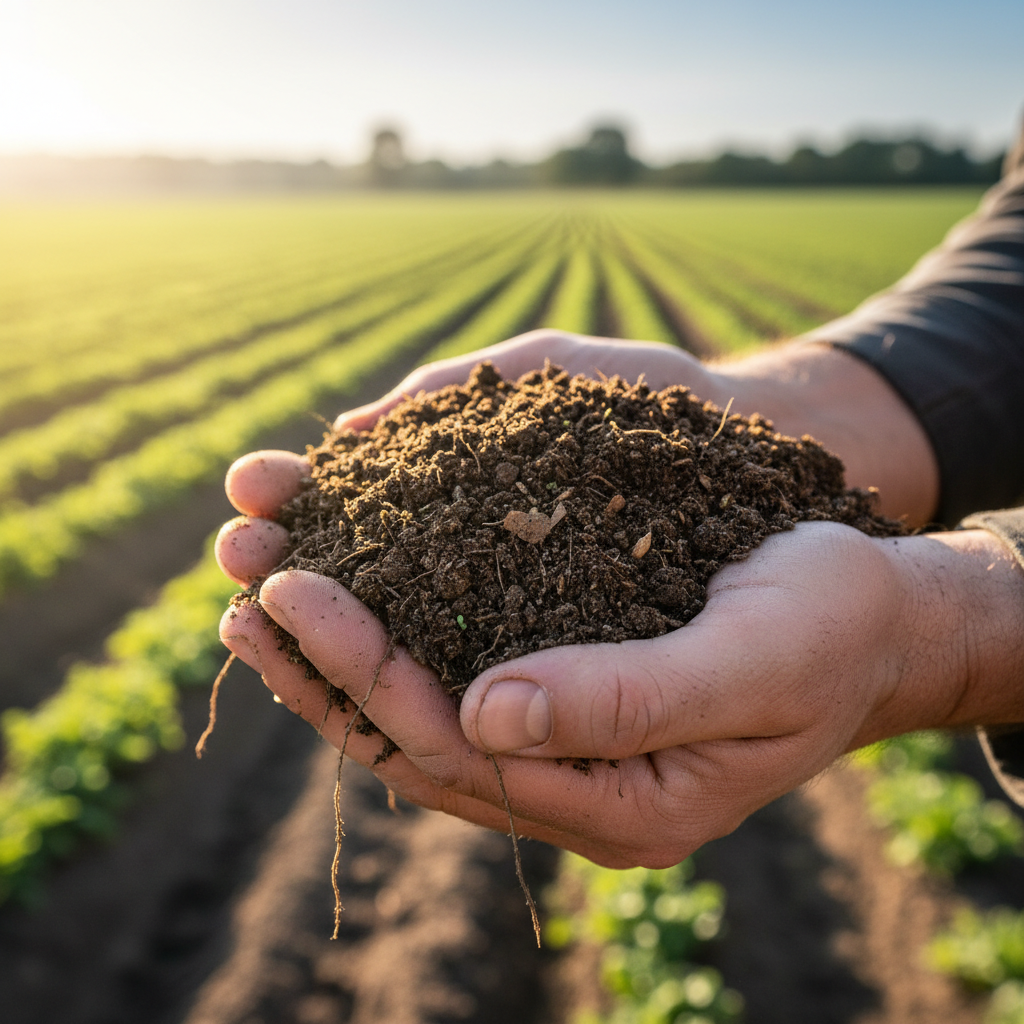
The science of soil organic matter (SOM) is the pivot point where land stewardship converts into financial stability. In the high desert soils of Northern Utah, SOM levels are historically low, often hovering below one percent. However, the impact of increasing this number is exponential. According to industry data, for every one percent increase in SOM, the soil can hold roughly 20,000 to 25,000 additional gallons of water per acre. In a dryland system where every inch of rainfall is a precious commodity, this increased water holding capacity serves as a biological insurance policy against drought.
Implementing cover crops Utah dryland farming strategies provides the living roots necessary to feed beneficial soil microbes. These microorganisms are responsible for nutrient cycling, breaking down minerals into forms that crops can actually use. Over time, this biological activity can lead to a significant reduction in synthetic fertilizer requirements, as the soil becomes more self-sufficient. While federal incentives provide immediate cash flow to offset implementation, the true ROI lies in these scalable solutions that improve soil structure and nutrient availability. Building SOM is a long term play, but it is the most effective way to elevate the yield floor of your acreage. For a baseline assessment of your current soil health, Contact Anders Farming to review recent soil test results and carbon sequestration potential.
Planning Your 2026 Regenerative Strategy: Steps to Get Started

Building soil organic matter requires a systematic approach that aligns with the specific moisture constraints of Box Elder County. To prepare for the 2026 season, your first step is conducting comprehensive soil testing to establish a baseline for carbon stores. This data is mandatory if you intend to participate in carbon credit markets, as you must prove the net increase in sequestered carbon to receive payments. Without a verified starting point, you cannot demonstrate the additionality required by private contracts.
Simultaneously, consult with your local NRCS office to determine your EQIP eligibility. Because federal application windows are often narrow, early engagement ensures your operation is positioned for the higher incentive tiers that offset seed and termination costs. When implementing these changes, designate a trial plot rather than converting your entire acreage at once. This allow you to observe how specific cover crops Utah dryland farming mixes interact with your wheat rotation and moisture profile on a manageable scale.
Successfully deploying these scalable solutions requires rigorous oversight to prevent moisture depletion. Professional land management ensures the transition to better land stewardship does not negatively impact your primary cash crop yields. For assistance with soil mapping or incentive applications, Contact Anders Farming to develop a site specific strategy for the upcoming season.
Is Dryland Farming with Cover Crops a Good Investment?
Determining if cover crops Utah dryland farming is a sound investment requires looking beyond the initial incentive check. While payments from EQIP or carbon markets provide immediate liquidity, the long term ROI is found in operational savings. Efficient weed suppression can reduce herbicide applications by competing for light and nutrients, lowering your input costs. Furthermore, the root structures from a well timed cover crop offer biological erosion control that mechanical fallow cannot match.
By maintaining soil stability, you protect the high value topsoil that contains the majority of your nutrient banks. These scalable solutions transition your operation from reactive management to proactive land stewardship, ensuring that every acre remains a resilient asset despite the volatility of the Intermountain West. For a detailed breakdown of how these practices impact your specific bottom line, Contact Anders Farming.