Effective Utah soil salinity management involves leaching excess salts from the soil through controlled irrigation applications that compensate for the region's limited rainfall. Local growers can further mitigate salt buildup by participating in state and federal programs that provide financial and technical support for improving irrigation efficiency and land management.
If you are noticing white crusts on your fields in Box Elder County, you already recognize the frustration of declining yields and poor water penetration. High salt concentrations in Utah soil can quietly choke out a harvest before it even has a chance to establish. Effectively managing these levels is not just about salvaged yields for this season; it is about protecting your long term investment in the land. In this guide, we provide a practical roadmap tailored for Northern Utah growers. You will learn how to distinguish between saline and sodic conditions, utilize professional soil testing, and implement remediation strategies such as leaching and improved drainage. We also examine salt tolerant crop selection and local cost share programs that provide financial support for salinity control efforts.
Understanding the Salt Challenge in Northern Utah Farmland
Managing land in Box Elder County requires a deep understanding of the delicate balance between mineral levels and moisture. For local growers, Utah soil salinity management is not a one-time fix but a persistent operational reality. Our region is defined by a semi-arid climate where low annual precipitation rarely provides enough volume to leach salts naturally. Instead, high evaporation rates draw moisture upward through the soil profile, leaving concentrated minerals behind at the surface where they can interfere with seed germination and root development.
The challenge stems from two distinct sources. Many of our local soils contain naturally occurring salts inherited from the ancient bed of Lake Bonneville. Furthermore, irrigation practices can inadvertently introduce new minerals. Water sourced from the Bear River or various groundwater wells often carries a significant salt load that builds up over successive growing seasons. Without sustainable production practices, these salts accumulate until they reach levels that hinder a plant’s ability to absorb water, a phenomenon known as osmotic stress.
At Anders Farming, we specialize in reliable agricultural operations that account for these specific regional pressures. We recognize that every acre in Northern Utah reacts differently to mineral buildup. Successful farming here depends on proactive monitoring and strategic resource management to ensure that salt accumulation does not compromise long term land stewardship or seasonal yields.
Saline vs Sodic Soils: Why the Distinction Matters for Your Yield
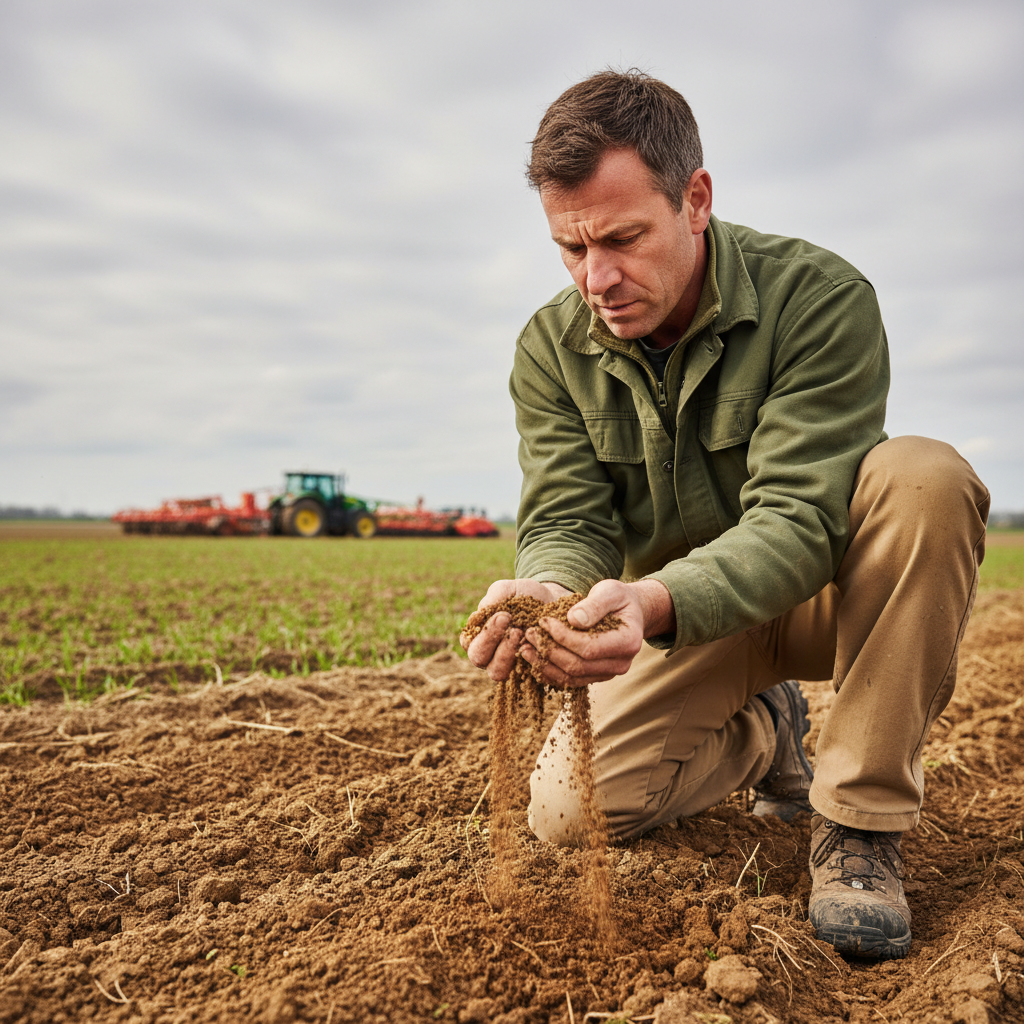
Identifying the specific chemical profile of your ground is the first step toward effective Utah soil salinity management. While many growers use the term salt as a catch-all, the technical distinction between saline and sodic conditions dictates your entire remediation strategy. Misdiagnosing the problem can lead to expensive mistakes that further degrade the land.
Saline soils contain high levels of soluble salts, such as sodium chloride or magnesium sulfate. The primary issue here is osmotic stress. High salt concentrations in the soil solution increase the energy required for roots to extract moisture. Even if the ground appears damp, a crop may show signs of wilting because the salts are effectively winning the tug-of-war for water.
Sodic soils present a structural crisis rather than a purely osmotic one. These soils have high levels of exchangeable sodium relative to calcium and magnesium. When sodium dominates the clay particles, it causes them to disperse when wet. This destroys soil aggregates, leading to heavy surface crusting, poor aeration, and severely restricted drainage. Growers often look for the following metrics on a soil report to understand their risk:
Term | Definition | Threshold for Concern |
|---|---|---|
Sodium Adsorption Ratio (SAR) | The ratio of sodium to calcium and magnesium in the soil water. | SAR > 13 |
Exchangeable Sodium Percentage (ESP) | The percentage of the soil's cation exchange capacity occupied by sodium. | ESP > 15% |
Electrical Conductivity (EC) | A measure of the total soluble salt concentration in the soil. | EC > 4 dS/m |
A saline-sodic soil exhibits both high total salt content and high sodium levels. Differentiating these is vital because sustainable production practices require different amendments for each. Adding excess water to a sodic soil without first applying a calcium source like gypsum can cause the soil to seal up, making drainage and reclamation nearly impossible. Establishing a clear baseline through reliable agricultural operations ensures you are treating the chemical root of the problem rather than just the symptoms.
Visual Indicators and Professional Soil Testing Methods
Identifying salinity issues starts with keen observation during the growing season. In Box Elder County, field indicators are often distinct. Look for white, powdery mineral deposits on the surface, especially near the tail ends of irrigation runs or in depressions where water pools. Sodic conditions often produce slick spots, areas where the soil structure has collapsed, preventing water penetration and leaving the surface looking greasy when damp or brick-hard when dry. Your crops will also signal distress. Salt-stressed plants often exhibit a stunted, dark blueish-green color and may show burnt leaf margins, even when soil moisture seems adequate.
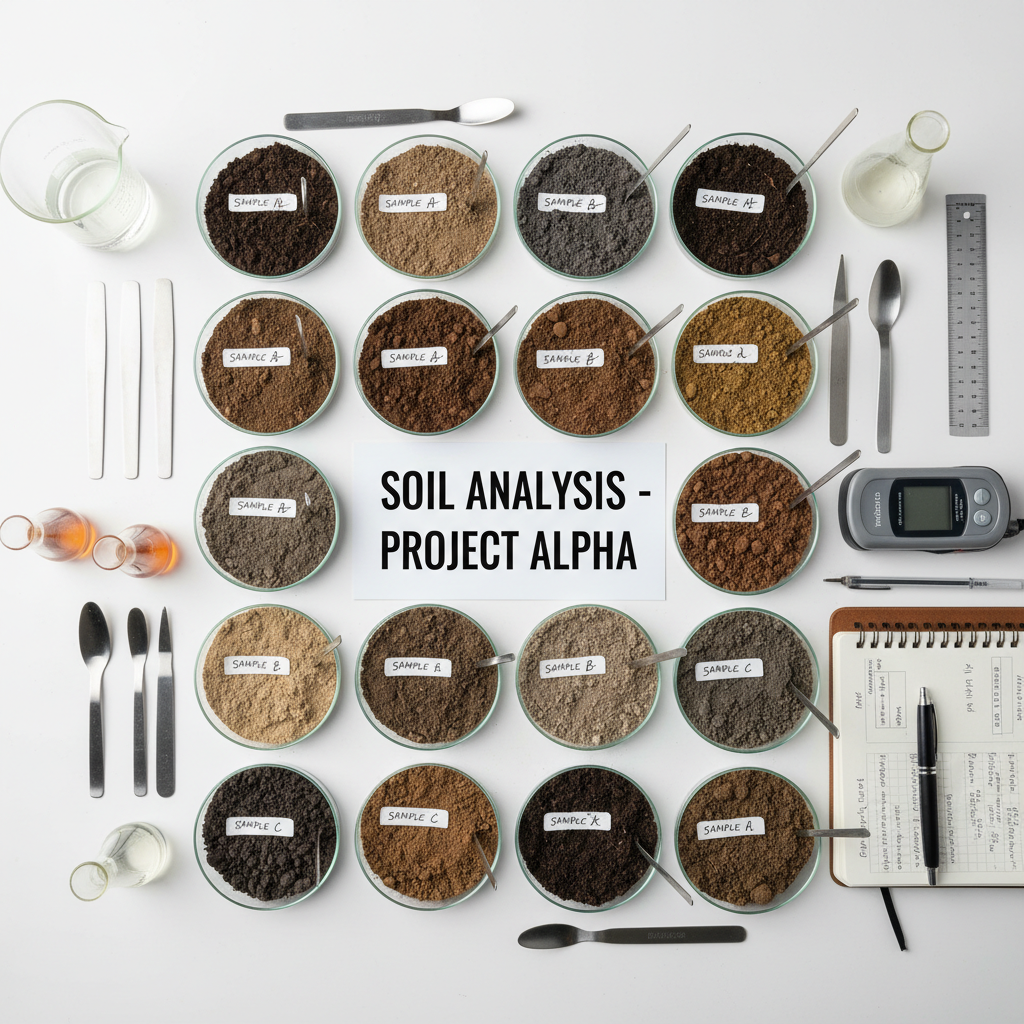
While these visual cues provide a starting point, they cannot replace precise data. Satellite remote sensing offers helpful insights into field-wide vigor patterns, but reliable agricultural operations require laboratory analysis to determine the exact chemical composition of the root zone. To ensure an accurate Electrical Conductivity (EC) reading, you must collect representative samples that account for the vertical movement of salts.
For meaningful results in Northern Utah, take composite samples from multiple locations across a field, separating samples by depth, typically 0 to 6 inches and 6 to 12 inches. This helps determine if salts are concentrating at the surface or if they have moved deeper into the profile. If you notice specific problematic patches, sample them separately from the rest of the field to avoid diluting the data. Establishing these metrics is the only way to implement sustainable production practices that target the specific needs of your land. If you need assistance with interpreting these results, contact our team to discuss a site-specific management plan.
Five Practical Methods to Manage and Remediate Saline Soils
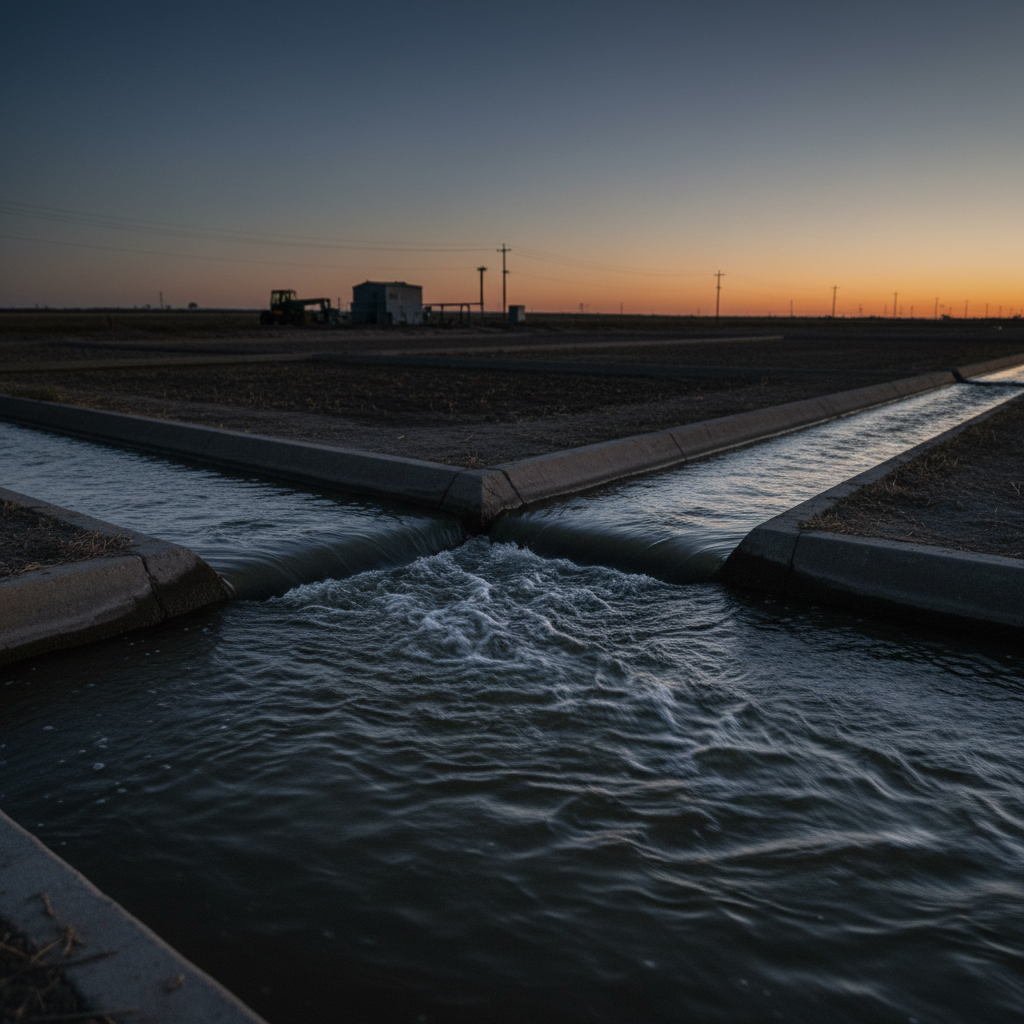
Once you have established a clear salinity profile through professional testing, you can implement targeted remediation strategies. Effective Utah soil salinity management requires a combination of physical and chemical interventions tailored to the specific hydrology of your field. Growers in our region typically rely on five proven methods to reclaim and manage salt-affected ground.
Leaching: This is the primary method for reducing total salt levels. By applying irrigation water in excess of what the crop requires, you flush soluble salts down through the soil profile and below the active root zone. This process requires high-quality water and permeable soil to be effective; otherwise, you risk simply saturating the root zone without moving the minerals.
Improved Drainage: Leaching only works if the water has a clear exit path. In parts of Box Elder County with heavy clay or high water tables, installing subsurface tile drains or performing precision land leveling prevents waterlogging. Without adequate drainage, the flushed salts will eventually migrate back to the surface through capillary action as the ground dries.
Soil Amendments: Choosing the right amendment depends entirely on your soil chemistry. For sodic soils, gypsum is the standard recommendation. The calcium in gypsum displaces sodium on the soil particles, which allows the sodium to be leached away. In contrast, incorporating organic matter, such as compost or crop residues, improves soil structure and enhances water infiltration for all salt-affected types, supporting long term sustainable production practices.
Mulching and Cover Cropping: Salts move upward when surface water evaporates. Maintaining a cover crop or applying mulch creates a physical barrier that shades the soil and reduces evaporation rates. This prevents minerals from being pulled to the surface where they can crust and damage emerging seedlings.
Precision Irrigation: Moving away from traditional flood irrigation toward more controlled systems, such as sprinklers or drip irrigation, allows for tighter management of water application. This shift is a core component of reliable agricultural operations because it minimizes the volume of salt-heavy water introduced to the field while ensuring crops receive consistent moisture.
At Anders Farming, our focus on efficient resource management helps growers maintain high productivity despite these regional soil challenges. If your current irrigation or drainage setup is struggling to keep pace with mineral accumulation, contact our team to evaluate scalable remediation solutions for your operation.
Selecting Salt Tolerant Crops for Northern Utah Climates
Even with consistent remediation, matching your crop selection to the soil’s current salinity profile is essential for sustainable production practices. In Box Elder County, we categorize crops by their ability to maintain yields as Electrical Conductivity (ECe) levels rise. For fields with persistent salt challenges, selecting high tolerance varieties ensures reliable agricultural operations continue despite mineral pressure.
Barley and sugar beets are the gold standard for high tolerance crops in our region, often maintaining productivity at ECe levels where other staples fail. Wheat offers moderate resilience, while alfalfa presents a unique case; it is quite tolerant once established, but seedlings are highly susceptible to osmotic stress. Conversely, corn, onions, and fruit trees are sensitive and will likely see significant yield declines if ECe levels exceed 1.7 to 2.0 dS/m.
Crop Type | Salinity Tolerance | ECe Threshold (dS/m) |
|---|---|---|
Barley | High | 8.0 |
Sugar Beets | High | 7.0 |
Alfalfa (Established) | Moderate | 2.0 to 3.0 |
Corn | Sensitive | 1.7 |
Onions / Fruit Trees | Sensitive | 1.2 to 1.5 |
Successful Utah soil salinity management often involves rotating to more resilient species while physical remediation is underway. Because germination is the most vulnerable phase, we recommend a pre-leaching irrigation event. Applying a targeted flush of water just before planting moves surface salts deeper into the profile, creating a cleaner window for seeds to sprout and establish their first roots. If you are uncertain about the specific thresholds of your current rotation, contact our team for a detailed assessment of your field data.
Navigating Utah Salinity Control Programs and Cost Share Funding

Managing salinity through structural changes requires significant capital investment. Fortunately, several programs assist Box Elder County growers in offsetting these costs. The Utah Department of Agriculture and Food (UDAF) manages the Salinity Control Program, which traditionally focuses on reducing salt loading into the Colorado River. However, local growers in the Great Basin should look toward state level Agriculture Optimization grants and the NRCS Environmental Quality Incentives Program (EQIP) funding.
These programs prioritize irrigation efficiency, such as replacing open dirt ditches with piped systems or transitioning to precision sprinklers. While the primary goal of these grants is often water conservation, the direct result is improved Utah soil salinity management by preventing over-irrigation and the subsequent rise of saline water tables. By reducing the volume of water lost to deep percolation, these upgrades help keep salts from being mobilized and brought into the root zone.
NRCS EQIP can specifically cover salt remediation practices like subsurface drainage projects or specific soil amendments when included in a comprehensive conservation plan. Leveraging these financial tools allows for reliable agricultural operations that maintain profitability while investing in sustainable production practices. If you need help identifying which cost share programs align with your field's specific salinity needs, contact our team to review your current infrastructure and drainage goals.
Managing salt levels is essential for sustainable farming in Box Elder County. By focusing on irrigation quality and drainage, you can protect your land for generations. If you want expert help navigating these technical soil challenges, a personalized strategy can make all the difference. You can find more information on my About page to see how my consulting supports your specific goals. Together, we can find the right balance for your unique local conditions, ensuring your yields remain strong.