Small farms in Utah can access financial security through programs like Whole Farm Revenue Protection and the Micro Farm Program. These options offer crop insurance for small farms by insuring up to 85 percent of a grower's total revenue across all commodities. This approach is particularly beneficial for diversified and dryland operations that require flexible coverage for multiple specialty crops.
For a small scale grower in Box Elder County, a single week of unseasonable heat or a failed spring rain can erase an entire year of labor. While larger operations rely on established safety nets, diversified and dryland farmers often feel overlooked by traditional commodity insurance programs. Navigating federal coverage requires a sharp understanding of how revenue based protections apply to varied yields and localized drought cycles. Protecting your equity means moving beyond basic policies to structures that actually account for the complexity of your fields. In this guide, we examine how the Whole Farm Revenue Protection and Micro Farm programs provide a shield for operations under $350,000. You will learn how to manage dryland risks, navigate the 20/20 eligibility rule, and prepare for upcoming enrollment deadlines to secure your farm’s financial future.
Why Small Farms in Box Elder County Need a Safety Net
In Northern Utah, agricultural success is often a matter of managing extremes. Box Elder County growers face a unique set of challenges, ranging from prolonged drought cycles to the unpredictable late frosts that can devastate a spring planting in a single night. For reliable agricultural operations, crop insurance for small farms is not merely an overhead expense reserved for industrial-scale monocultures; it is a fundamental tool for financial resilience.
At Anders Farming, we view risk management as an extension of land stewardship. Sustainable production requires more than just soil health and water efficiency; it requires a strategy to protect the farm's viability when the climate fails to cooperate. Historically, many small-scale growers felt priced out of federal programs, assuming the paperwork and premiums were tailored only for thousands of acres of commodity grain.
Recent shifts in USDA policy have introduced programs specifically designed for diversified operations and modest revenue brackets. These new safety nets recognize that a farm generating between $1,001 and $5,000 in monthly revenue is a vital part of the local supply chain. By integrating these protections, growers can maintain their commitment to responsible production without risking the entire operation on a single bad season. If you are looking to stabilize your output, you might choose to partner with Anders Farming to explore scalable solutions.
Whole-Farm Revenue Protection (WFRP): The Multi-Crop Shield
Whole-Farm Revenue Protection (WFRP) serves as a comprehensive safety net by moving away from the traditional model of insuring individual commodities. Instead of managing separate policies for each crop, this crop-neutral approach protects the adjusted gross revenue of the entire farm. This offers a streamlined form of crop insurance for small farms, specifically those in Box Elder County that maintain reliable agricultural operations through a mix of small grains, specialty vegetables, and livestock. This unified coverage ensures that a loss in one area, such as a late frost hitting a vegetable plot, can be offset by the stability of other revenue streams within the same policy year.
The structure of WFRP provides a ceiling of $17 million in insured revenue, which accommodates significant growth while remaining accessible to smaller growers. One of the most significant advantages for Utah’s diversified farmers is the subsidy incentive tied to commodity counts. As a farm increases the number of different products it sells, the federal government typically provides a higher premium subsidy. This makes the policy more affordable for those who actively move away from the financial risks associated with single-crop systems.
Beyond financial stability, this insurance model reinforces land stewardship by rewarding diversification. According to sustainable agriculture research, diversified rotations are far superior to monocropping for long term soil health. By rotating crops and integrating livestock, growers can naturally break pest cycles and improve soil organic matter, which reduces the need for intensive chemical inputs. WFRP aligns with these ecological goals by providing a financial cushion that makes it viable to step away from the simplified, high-risk monocultures of the past. By securing a policy that views the farm as a single, integrated ecosystem, growers can focus on long term productivity and resource efficiency rather than short term yield spikes.
The Micro Farm Program: Tailored Coverage for Operations Under $350,000

Building on the multi-crop shield provided by Whole-Farm Revenue Protection, the USDA introduced the Micro Farm program to address the administrative hurdles that often discourage smaller operations. For growers managing reliable agricultural operations in the $1,001 to $5,000 monthly revenue bracket, Micro Farm offers a streamlined path to security without the heavy burden of commodity specific reporting. This program is specifically designed to make crop insurance for small farms more accessible by reducing the amount of paperwork required for application and record keeping.
The program targets operations with an approved revenue cap of $350,000; for those who continue with the policy in subsequent years, the cap increases to $400,000 for carryover. The primary advantage here is simplicity. Unlike standard policies that might require exhaustive historical records for every individual vegetable variety or livestock category, Micro Farm uses a simplified process that mirrors the financial realities of a small scale business. This allows producers to focus more on field work and less on complex actuarial data.
One of the most valuable features for Utah’s artisanal producers is the inclusion of post-harvest processing costs in the insured revenue. For many in Box Elder County, value added products like dried herbs, packaged specialty grains, or washed and bundled produce are essential to maintaining healthy margins. Under traditional insurance models, these added values were often excluded, leaving a gap between the raw field value and the actual market revenue. Micro Farm recognizes these costs as part of the farm’s total economic output. By choosing this path, growers can partner with Anders Farming to implement scalable solutions that protect the entire revenue cycle from soil to sale.
Insuring Dryland Operations: Managing Drought Risks in Northern Utah
Dryland farming in Northern Utah is a constant battle for moisture. In the Intermountain West, growers operate with limited annual precipitation, making drought the primary threat to long term viability. For many producers in Box Elder County, Revenue Protection (RP) offers a more robust solution than traditional yield only coverage for dryland wheat and barley. While Multiple Peril Crop Insurance (MPCI) focuses on physical yield losses from events like hail or frost, RP adds a critical layer of protection against market volatility. If a drought reduces your harvest and global prices simultaneously drop, RP ensures your reliable agricultural operations maintain a baseline income based on the higher of the projected or harvest prices.
This financial tool works alongside physical land stewardship. Practices like no-till drilling or strategic cover cropping are essential for soil moisture management in our high desert climate. These methods increase water infiltration and reduce evaporation, essentially building biological insurance into the soil profile. When you combine these sustainable methods with formal crop insurance for small farms, you create a dual layer of protection. The field management minimizes the severity of a yield hit, while the insurance covers the financial shortfall that even the best management cannot prevent.
Choosing between a revenue based approach and a yield based MPCI policy often depends on your specific infrastructure. Those with high equipment overhead or market sensitive debt often find the revenue guarantee more stabilizing because it accounts for price fluctuations. Producers looking to refine these strategies can partner with Anders Farming to align their insurance needs with their resource management goals, ensuring that dryland acres remain productive even through prolonged dry cycles.
Understanding the 20/20 Rule and Key Eligibility Requirements

In the context of crop insurance for small farms, the 20/20 rule is a critical benchmark for determining eligibility for replanting payments or prevented planting claims. It specifies that for a loss to be recognized under these specific provisions, the affected area must be at least 20 acres or 20 percent of the insured acreage for that unit, whichever is smaller. For a diversified operation in Box Elder County, this means a three acre specialty vegetable plot could meet the threshold if it represents more than 20 percent of that specific crop's planting, even if the total farm acreage is much larger.
The USDA generally defines a small farm based on revenue rather than just physical size. Operations with an annual gross cash farm income (GCFI) under $350,000 fall into this category, which encompasses many of the reliable agricultural operations in Northern Utah. Because eligibility for programs like Micro Farm is tied to financial performance, maintaining precise documentation is non-negotiable.
Successful applicants must provide a minimum of three to five years of historical records, depending on the specific policy. The essential toolkit for a claim includes: - Schedule F tax forms from the most recent three to five years. - Detailed production records showing specific yields and harvest dates. - Sales receipts and contracts to verify actual market prices and value added income.
Record keeping is often the primary barrier for local growers, yet it is the foundation of efficient resource management. At Anders Farming, we view data as a tool for better land stewardship. When you partner with Anders Farming, you are utilizing a system that prioritizes the organized tracking of inputs and outputs, transforming the paperwork hurdle into a roadmap for long term scalability and operational resilience.
How to Prepare for 2025 and 2026 Crop Insurance Deadlines
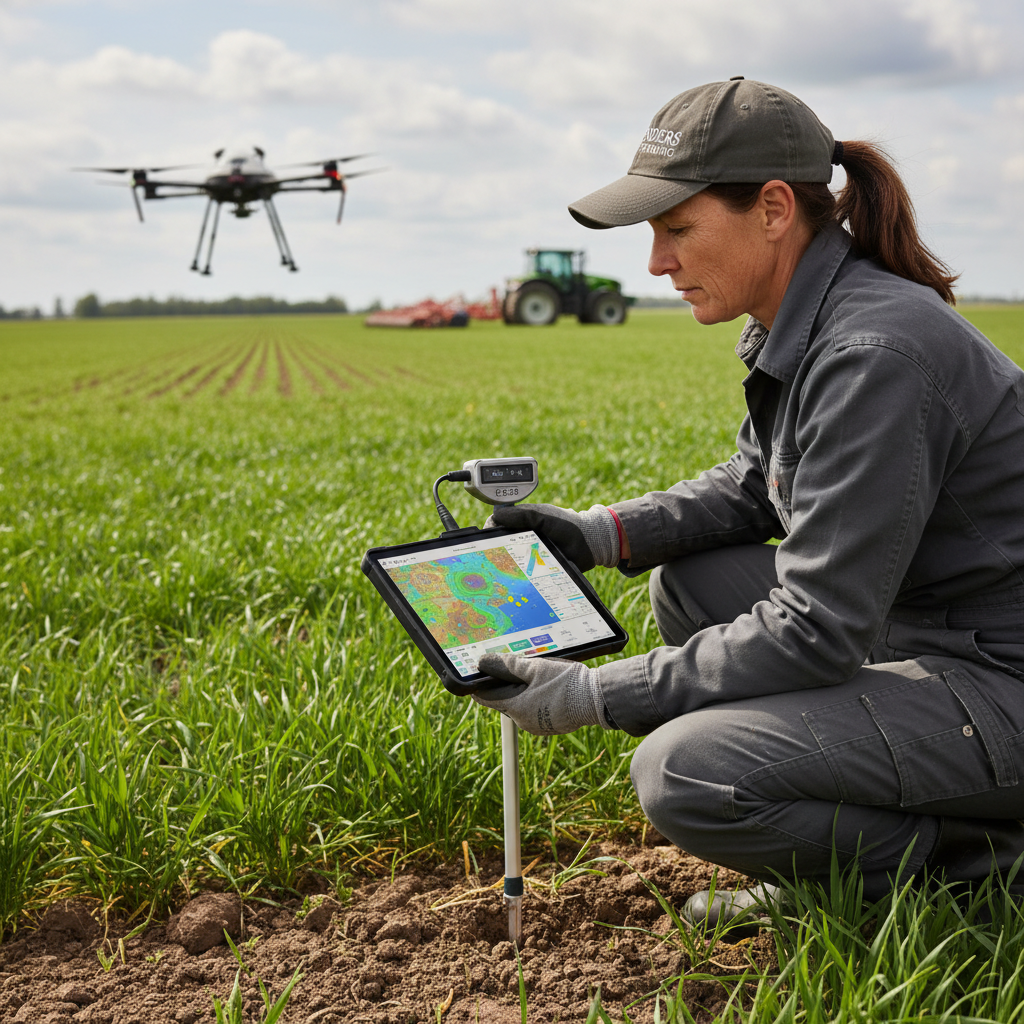
Effective risk management requires more than just choosing a policy; it demands adherence to a strict administrative calendar. For those seeking crop insurance for small farms in Box Elder County, the most critical date for spring planted crops is typically March 15. This sales closing date is the final deadline to apply for new coverage or make changes to an existing policy for the 2025 and 2026 cycles. Missing this window often means waiting another full year for protection, leaving your revenue vulnerable to the unpredictable Intermountain West weather.
Finding the right professional is the first step in this process. Growers should utilize the USDA Risk Management Agency (RMA) online agent locator tool to find a licensed provider who understands the nuances of Utah’s climate and specific programs like Micro Farm. Once an agent is secured, the focus shifts to the 2026 planting calendar. Policies dictate specific earliest planting dates and final planting dates to ensure crops are established during viable windows. In an erratic Utah spring, the temptation to plant during an unseasonably warm February spell can be high; however, doing so before the earliest allowed date can void your coverage.
At Anders Farming, we believe that reliable agricultural operations are built on this type of careful, data driven planning. By aligning your field activities with these federal deadlines, you demonstrate the commitment to land stewardship required to maintain a sustainable business. If you are ready to professionalize your risk strategy and ensure your production remains resilient through the coming seasons, you can partner with Anders Farming to integrate these technical requirements into your broader management plan.