Farmland leasing Utah typically utilizes cash rent or crop share agreements, with irrigated land frequently commanding a premium of $100 per acre over non-irrigated acreage. Landowners and tenants must negotiate terms based on regional productivity and water access; consequently, fair agreements often balance fixed income against shared production risks.
Securing a fair farmland lease in Utah often feels like navigating a moving target where market volatility meets the harsh realities of high-altitude agriculture. Landowners and growers frequently struggle to balance the need for predictable revenue against the unpredictable nature of water availability and soil health. In an environment where water rights can dictate the entire value of an operation, a handshake deal or a generic template is no longer sufficient to protect your interests. Expertise in local land management is essential to ensure that every acre remains productive and profitable for the long term. This guide explores the strategic differences between cash rent, crop share, and flexible hybrid models tailored specifically for Utah growers. You will learn how to factor irrigation into your pricing, identify the key components of a fair agreement, and prioritize land stewardship to safeguard your legacy.
Navigating the Complexities of Farmland Leasing in Utah
Utah’s agricultural landscape is undergoing a significant transition. As land values fluctuate and input costs rise, the process of farmland leasing Utah has moved away from informal handshake agreements toward highly professionalized structures. This shift is necessary because farming in the Great Basin is inherently complex. While 73 percent of Utah cropland is irrigated, the mere presence of a headgate or a pivot does not guarantee success. Effective management requires a technical understanding of senior versus junior water rights, delivery schedules, and the specific soil chemistry found in our high-desert climate.
In Box Elder County, these challenges are particularly pronounced. Anders Farming operates with a deep understanding of local saline-sodic soil profiles and the specific nuances of Bear River water systems. We view our agricultural operations and management as a stewardship responsibility, where data-driven decisions replace guesswork.
A well-structured lease serves as the foundation for a multi-year partnership rather than a simple financial transaction. It must align the goals of the landowner and the operator to ensure long term productivity and asset protection. To learn more about Anders Farming, landowners can see how we prioritize resource preservation to keep these acres viable for future generations.
The Utah Water Factor: How Irrigation Impacts Lease Value
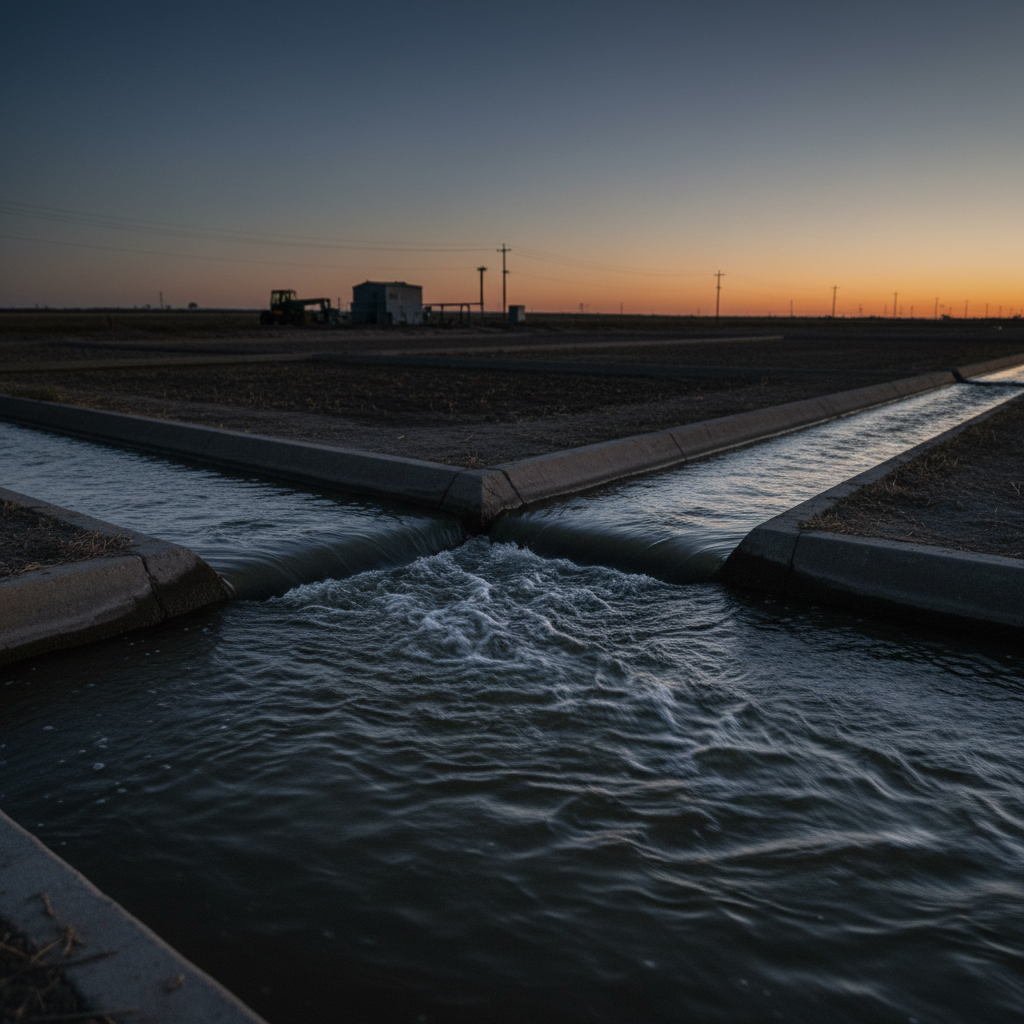
In Utah, a lease agreement is rarely just about the acreage; it is fundamentally about the water rights attached to that soil. For anyone engaged in farmland leasing Utah, the distinction between dryland and irrigated ground is the single largest driver of market value. Irrigated cropland in this region typically commands at least 100 dollars more per acre than its non-irrigated counterparts. This premium reflects the stability that consistent water access provides against the volatility of high desert weather.
However, irrigation brings operational complexities that must be addressed in writing to prevent mid-season conflict. A robust lease defines exactly who is responsible for the infrastructure. If a center pivot requires a new gearbox or a pump motor fails in July, the contract should dictate whether the repair cost falls on the landowner or the tenant. Similarly, the maintenance of delivery ditches and the clearing of headgates are labor-intensive tasks that require clear assignment.
Operating costs represent another significant variable. Electricity for high-horsepower pumps can reach thousands of dollars during peak summer months. Leases should explicitly state who pays the utility bills and who is responsible for winterizing the system. In Box Elder County, where water delivery schedules are rigid, misunderstanding these duties can lead to lost crops and damaged equipment. Clear documentation ensures that agricultural operations and management proceed without interruption, protecting the land’s productivity through the hottest parts of the growing season.
Cash Rent Leases: Simplicity and Fixed Returns
Fixed cash rent leases represent the most straightforward structure within farmland leasing Utah. In this arrangement, the tenant pays a set dollar amount per acre annually, providing the landowner with a guaranteed income stream that remains unaffected by volatile market prices or varying crop yields. Current market data indicates that general irrigated cropland in the region typically commands between $160 and $250 per acre. For specialty vegetable ground or high productivity acreage, these rates can escalate to $500 or more per acre.
The primary benefit for the landowner is simplicity and minimal operational involvement. The financial return is fixed, which aids in long term budgeting and eliminates the stress of monitoring daily commodity fluctuations. However, this model prevents the owner from benefiting during high yield bumper years. A significant risk also exists regarding soil stewardship; some tenants may engage in soil mining, where they extract maximum value without investing in necessary fertilizers or soil amendments to save on short term costs.
Anders Farming addresses these concerns by prioritizing soil health within our agricultural operations and management. We view a cash lease as a commitment to asset preservation rather than a simple extraction of resources. By utilizing precise nutrient application and modern resource management, we ensure the land remains productive and fertile, protecting the landowner’s investment for the decades to come.
Crop Share Arrangements: Sharing Risk and Reward
While cash rent focuses on simplicity, crop share arrangements transform the relationship into a formal partnership. In this model, the landowner and the operator split the actual crop output. In Box Elder County and surrounding regions, common splits for irrigated ground often follow a 25/75 or 33/66 ratio, where the landowner receives the smaller percentage of the harvest in exchange for providing the land and, frequently, a portion of the operating inputs.
This arrangement typically requires the landowner to share in the variable costs of production. Beyond the land itself, inputs such as seed, fertilizer, and chemical applications are often shared in the same proportion as the crop split. Crucially for farmland leasing Utah, water assessments and delivery fees are also frequently shared. Because the landowner is more exposed to the daily realities of the farm, this model demands a high level of transparency and trust. It requires consistent communication regarding planting decisions, harvest timing, and marketing strategies to ensure both parties are satisfied with the final bins or bales.
The primary advantage of a crop share is the direct alignment of interests. When the tenant achieves a high yield through meticulous agricultural operations and management, the landowner’s return increases proportionally. This model also provides a natural hedge against market volatility; if grain prices surge, the landowner captures that upside immediately. To determine a fair split, professional operators often look at a 10 year rolling average for gross shares. This long term data set helps smooth out the extreme weather events typical of the Great Basin, ensuring the lease remains equitable through both drought years and record breaking harvests.
The Flexible Lease: A Modern Hybrid for Utah Growers
The flexible lease, often called flex rent, offers a middle ground that is gaining significant traction in farmland leasing Utah. This model functions by establishing a guaranteed base floor price, typically set slightly below the standard market cash rate. This floor ensures the landowner receives a minimum return regardless of seasonal volatility. If yields or commodity prices for regional staples like alfalfa hay or small grains surpass a pre-negotiated threshold, a bonus payment is triggered, allowing the landowner to capture a portion of the surplus.
In the Great Basin, where multi-year droughts can severely impact production and water allocations, this structure protects the tenant from being trapped by high fixed costs during lean years. Conversely, when market prices spike or favorable weather leads to exceptional harvests, the landowner participates in the windfall. This approach requires precise record-keeping and clear triggers, often utilizing local elevator prices or verified scale tickets. It represents a sophisticated evolution in agricultural operations and management, providing a balanced framework that adapts to the economic realities of modern high-desert farming.
Key Components of a Fair Utah Farmland Lease

Transitioning from flexible lease structures to daily reality requires a rigorous written contract. While historical agriculture often relied on informal agreements, modern farmland leasing Utah demands precision to protect the interests of both the landowner and the operator. A handshake deal provides no protection against the complexities of water right disputes, equipment damage, or liability issues common in Box Elder County.
To address how to write a land lease agreement, certain non-negotiable elements must be included to ensure a professional standard:
Legal Land Descriptions: Do not rely on local nicknames for fields. Include precise legal descriptions, tax parcel IDs, and clearly defined boundaries for irrigated versus non-irrigated acreage.
Duration and Term: Specify the exact start and end dates. Multi-year agreements are common in agricultural operations and management to allow for long term soil planning and capital investment.
Payment Terms: List specific due dates, late fees, and preferred methods of payment.
Termination Notice: Utah law generally requires significant lead time for agricultural lease termination; the contract should explicitly state the deadline for renewal to avoid mid-season disruptions.
Liability Insurance: Require the tenant to maintain adequate coverage to protect the landowner from accidents, equipment mishaps, or potential chemical drift.
Formal documentation ensures that both parties understand their operational boundaries and financial obligations long before the first seed is planted in the spring. This clarity prevents the erosion of trust that can occur when unspoken expectations are not met during the pressures of the harvest season.
Prioritizing Land Stewardship in Your Agreement

While a legal contract provides the framework, stewardship clauses define the actual legacy of the land. In the context of farmland leasing Utah, landowners often worry that a short term tenant might extract maximum yield while depleting soil organic matter or ignoring long term nutrient balance. To prevent this, specific conservation benchmarks should be integrated directly into the lease agreement as enforceable standards.
Effective stewardship starts with mandatory soil testing. We recommend requiring an initial baseline test followed by annual updates to track phosphorus, potassium, and micronutrient levels. In Box Elder County, managing salinity is a high priority; improper irrigation management can lead to salt accumulation that takes years to remediate. Clauses should specify the use of cover crops during fallow periods to prevent wind erosion and the application of soil amendments that strictly match the specific requirements of the crop rotation.
At Anders Farming, our agricultural operations and management strategies focus on leaving the acreage in better condition than we found it. We use precision data to manage resource inputs, ensuring that fertility is maintained through targeted applications rather than broad, inefficient spreads. This data-driven approach protects the land’s underlying asset value and ensures its long term viability for future generations. To discuss how these stewardship principles can be applied to your specific acreage, contact our team to review your resource management goals.
Establishing a fair lease in Utah requires a balance between risk and reward, whether you choose cash rent or crop sharing. The right agreement protects your property while ensuring a productive relationship with your tenant. If you want expert help navigating these complexities or managing your land efficiently, you can read more about Anders Farming to see how we assist landowners. We are here to help you maximize your farm's potential through professional management and clear, sustainable leasing strategies.