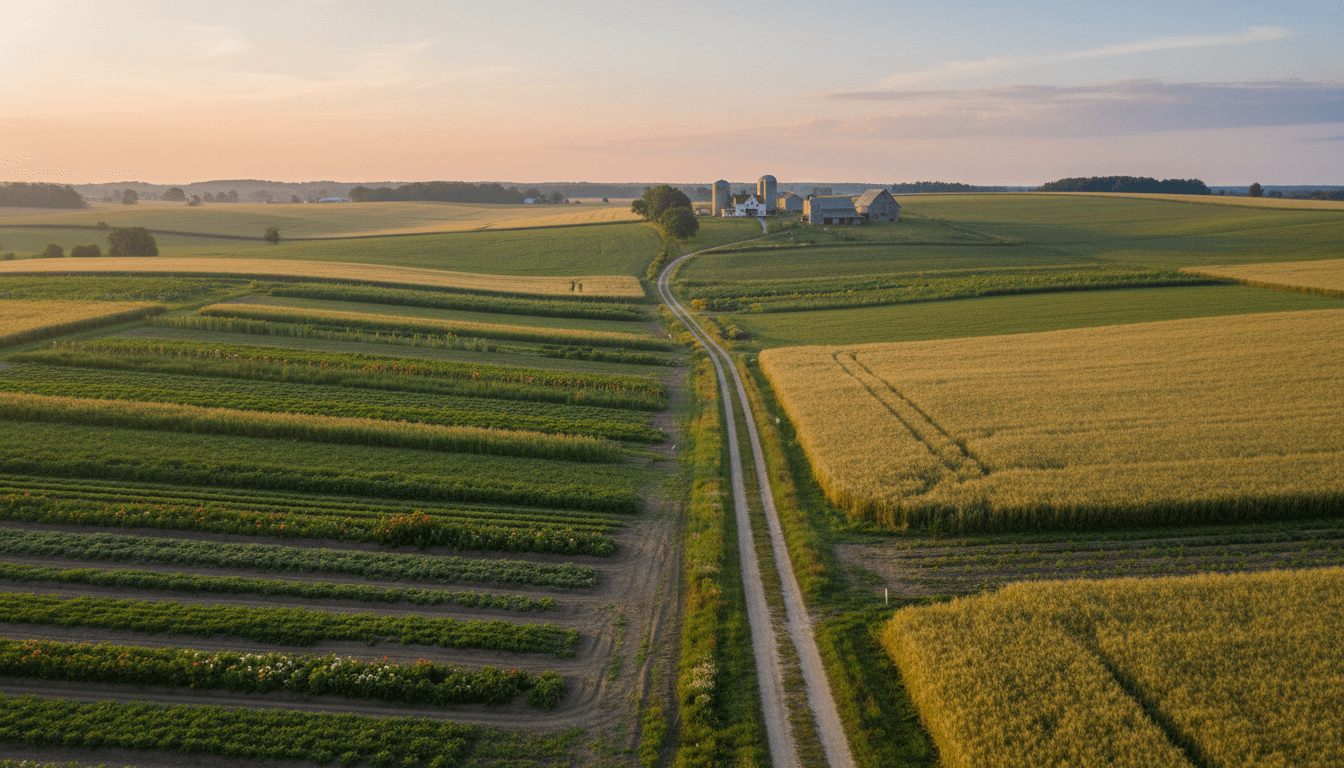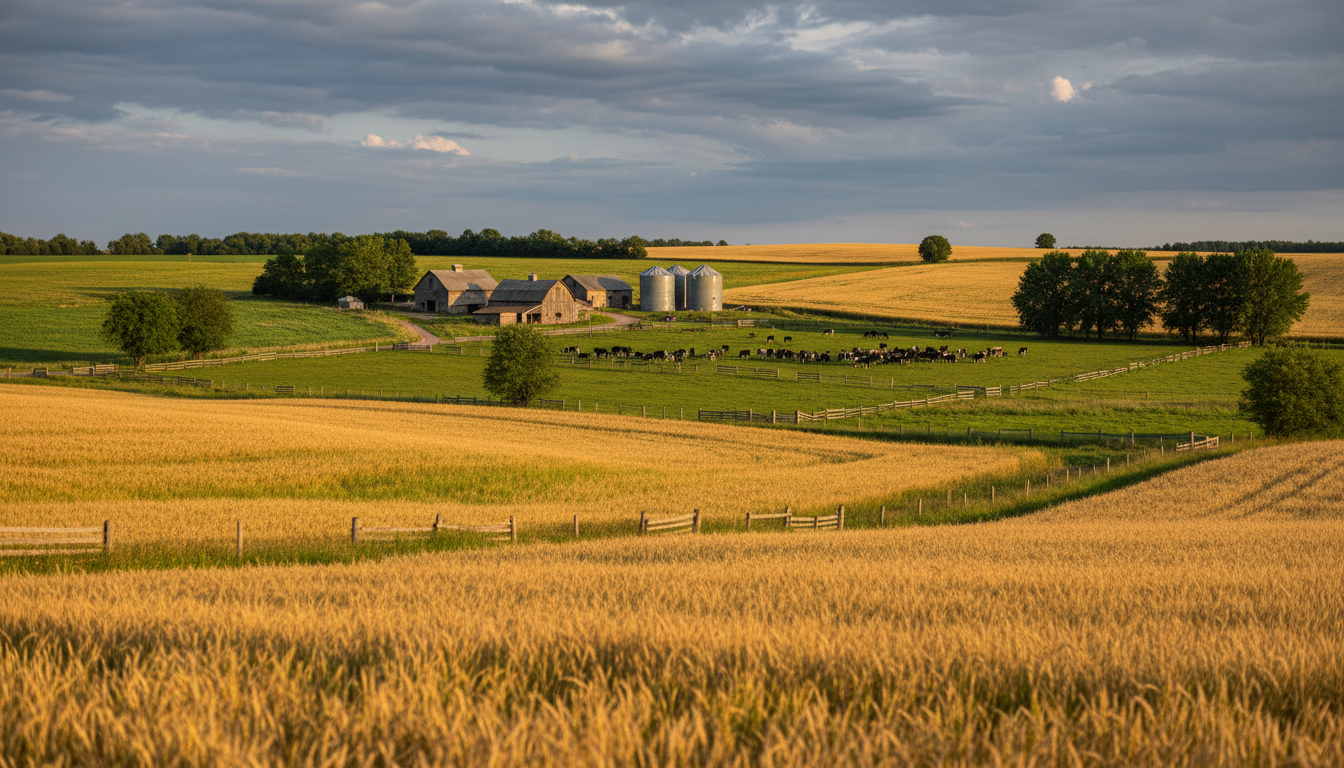
Precision agriculture small farm operations in Utah dryland regions improve profitability by adopting targeted technologies like GPS guidance systems and soil moisture sensors to reduce input costs. These tools allow farmers to minimize water waste and tractor hours while maximizing crop quality; additionally, focusing on soil health and variable rate technology provides the fastest return on investment for smaller acreages.
For many small scale dryland farmers in Utah, the conversation around precision agriculture feels geared toward massive corporate operations with bottomless budgets. You are likely managing tight margins and unpredictable moisture, making the high cost of sophisticated tech seem like an unnecessary gamble for limited acreage. Yet, when every drop of water and gallon of fuel dictates your profitability, precision becomes a necessity rather than a luxury. This article breaks down how to implement high impact, low cost solutions tailored for the Intermountain West. We will examine the specific ROI of soil moisture sensors and variable rate irrigation, alongside guidance systems that reduce overlap without a full fleet replacement. You will discover how to build a strategic tech stack that addresses Utah’s unique soil refill points and secures your operation’s future.
Redefining Precision Agriculture for Small Scale and Dryland Farming
Precision agriculture is often mischaracterized as a high-tech luxury reserved for massive corporate operations. In reality, it is a resource management strategy that is highly effective for smallholders. The misconception that a successful implementation requires a full equipment overhaul prevents many growers from accessing scalable solutions for productivity. For operations in Box Elder County, Utah, where water scarcity is a constant pressure and soil variability is the norm, every input must be accounted for with high resolution.
On a precision agriculture small farm, the objective shifts from achieving massive economies of scale to increasing the frequency of wins. A win might be preventing crop stress on a dry ridge through better moisture data or saving several hours of tractor time by reducing pass overlap. These incremental improvements in land stewardship and resource management aggregate into significant profitability. Rather than focusing on capital-intensive machinery, small-scale growers find success by prioritizing data-driven decisions that match the specific needs of their acreage. By focusing on reliable agricultural operations that utilize targeted tools, farmers can manage their limited moisture profiles and soil zones without the burden of a massive tech debt.
The ROI Shift: How Precision Ag Pays for Itself on Fewer Acres
Determining if precision agriculture is worth it requires a fundamental shift in how we calculate value. For a 5,000 acre operation, Return on Investment (ROI) is often found in shaving pennies off fuel costs across a massive fleet. On a precision agriculture small farm in Box Elder County, the math is different. Here, ROI does not scale linearly; it changes shape. The focus moves from volume based savings to the optimization of the four flows: inputs, water, hours, and quality.
For Utah growers, the most immediate return often stems from water conservation and chemical overlap reduction. A small farm might only save a few hundred gallons of fuel, but the ability to hit the refill point precisely or avoid double spraying a headland can drastically improve margins. When you aggregate these four flows, even entry level tools costing under $500, such as basic handheld GPS units or moisture probes, can deliver an ROI of 120% or higher within a single season.
Flow Category | Primary ROI Driver for Small Farms |
|---|---|
Inputs | Reduced seed and fertilizer waste through overlap control |
Water | Avoiding over-irrigation or critical crop stress periods |
Hours | Decreased tractor time and labor via efficient path planning |
Quality | Uniformity in crop maturity leading to higher market premiums |
By integrating these scalable solutions for productivity, a grower captures value that is often lost in conventional, broad-stroke farming. This approach ensures that every dollar spent on technology directly supports long term land stewardship and the financial viability of the operation. By focusing on reliable agricultural operations, smallholders can secure these gains without the heavy capital burden typically associated with industrial tech.
Soil Moisture Sensors: Managing the Refill Point in Utah Soils
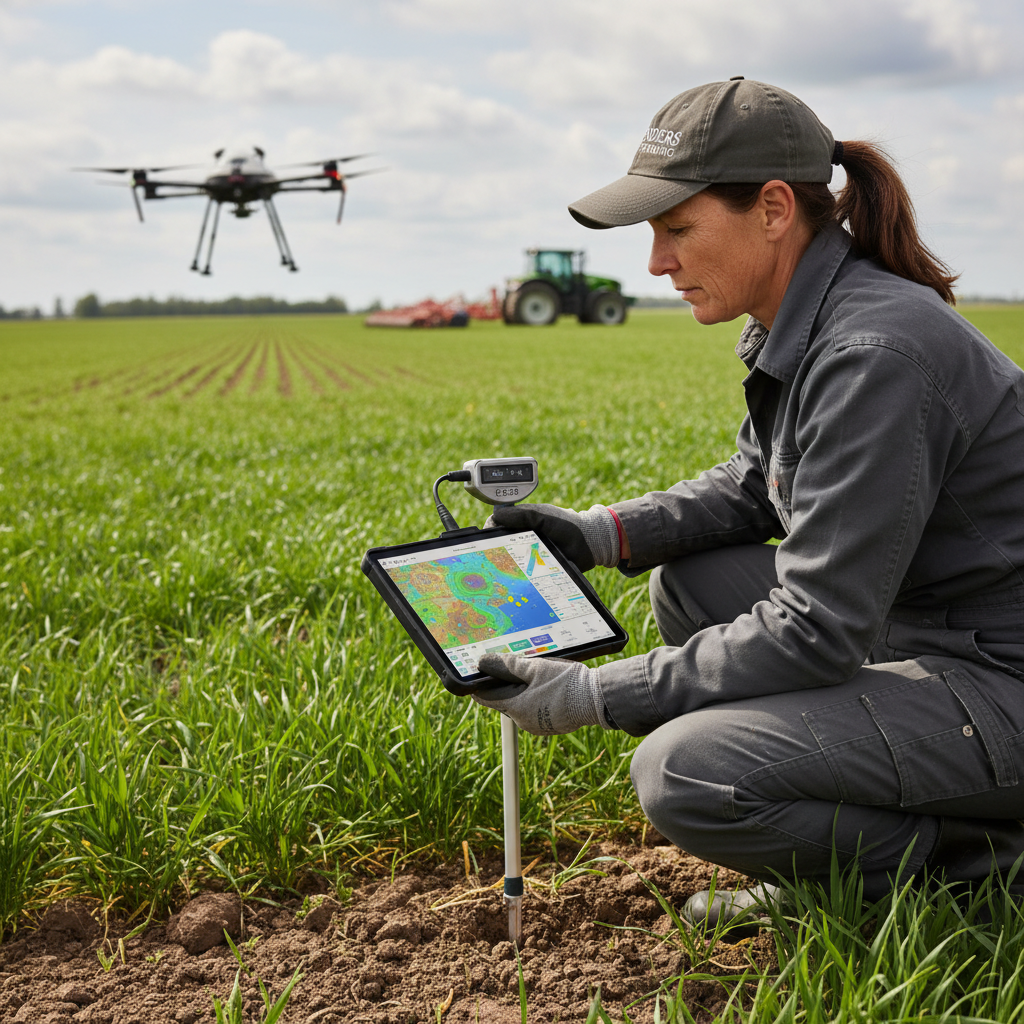
Securing these financial gains requires a departure from traditional, calendar based irrigation schedules. In Box Elder County, relying on a fixed rotation often leads to late season water deficits or unnecessary pumping costs. Soil moisture sensors provide the data needed to hit the refill point precisely, ensuring the crop has access to water during critical physiological stages like germination or grain fill. By following Utah State University Extension guidelines, growers can define field capacity, the maximum amount of water the soil can hold after drainage, and the management allowable depletion or refill point, which is the threshold where plant stress begins to impact yield.
Choosing the right tool is essential for a precision agriculture small farm. Most growers choose between capacitive and tensiometric sensors. Capacitive sensors measure the dielectric constant of the soil to estimate volumetric water content. They are excellent for tracking trends and seeing how deep a rain event or irrigation set penetrated the profile. Tensiometric sensors, however, measure the physical tension or pull that roots must overcome to extract water. This provides a direct insight into plant stress, which is invaluable in the varying clay and loam textures found across our local landscape.
Sensor Type | Function | Primary Benefit for Utah Growers |
|---|---|---|
Capacitive | Measures volumetric water content | Fast response time; excellent for identifying drainage rates |
Tensiometric | Measures soil water tension | Directly relates to plant stress levels in heavy soils |
For dryland operations, these sensors act as a check against the limited moisture profile. Even without active irrigation, knowing the remaining moisture at the two foot mark allows for better timing of top dress fertilizers or decisions regarding grazing. This level of land stewardship prevents the depletion of deep moisture reserves too early in the season. Implementing these reliable agricultural operations ensures that every drop of available water is leveraged, providing scalable solutions for productivity that protect the bottom line when the heat of July arrives.
Variable Rate Irrigation and Water Efficiency for Dryland Fields
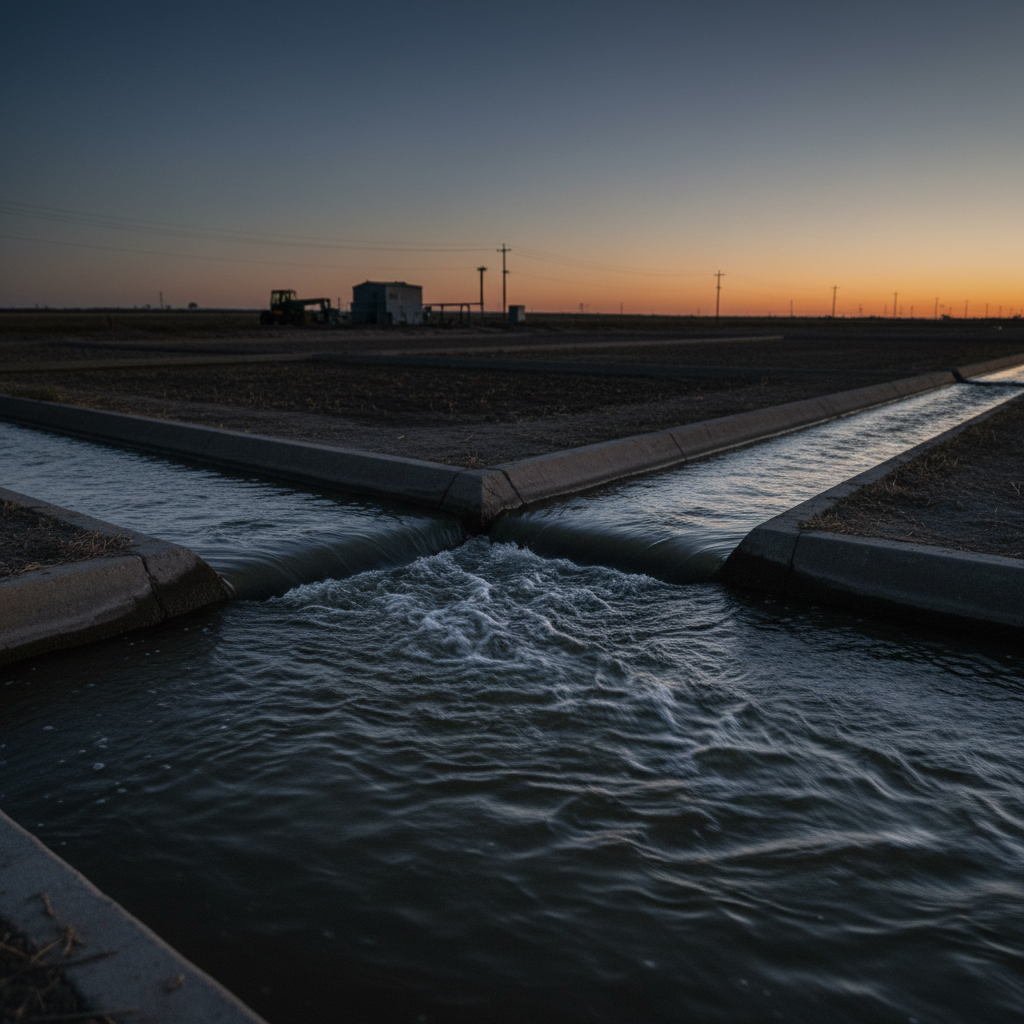
Transitioning from monitoring to action requires an understanding of Variable Rate Irrigation (VRI). While moisture sensors identify when to water, VRI technology dictates exactly where and how much to apply across varying topography. Research indicates that VRI can reduce total water consumption by 20% to 40%, depending on the degree of field variability. This is a critical metric for a precision agriculture small farm where water is often the most expensive and limited input.
In the diverse terrain of Box Elder County, a single field often contains multiple soil zones. Sandy patches drain quickly, leading to nutrient leaching if over watered, while clay heavy pockets are prone to ponding and anaerobic conditions. VRI addresses this by adjusting the flow rate or speed of the delivery system to match the specific infiltration rate of each zone. By avoiding a uniform application across non-uniform ground, growers practice better land stewardship by protecting soil structure and preventing runoff.
Soil Type | Water Behavior | VRI Strategy |
|---|---|---|
Sandy Loam | High infiltration; low retention | Frequent, low-volume applications to prevent leaching |
Heavy Clay | Low infiltration; high retention | Slow, deep applications to prevent ponding and runoff |
Beyond the immediate biological benefits, these reliable agricultural operations are becoming a necessity within Utah's regulatory framework. As water rights come under increased scrutiny, the ability to demonstrate scalable solutions for productivity that utilize every drop efficiently is a defensive strategy. Implementing VRI proves that an operation is maximizing its allotted acre-feet; securing the farm's future in an era of tightening resource management.
Low Cost Guidance Systems for Reduced Overlap and Fuel Savings
While VRI optimizes water, guidance systems optimize the movement of every piece of equipment across the field. For a precision agriculture small farm, the barrier to entry is no longer a five figure, factory installed terminal. Modern, retrofittable GPS guidance systems allow growers to outfit existing tractors with high accuracy for a fraction of the cost of new machinery. These tools provide immediate visual feedback, ensuring that tillage, seeding, and spraying passes are executed with minimal waste.
The economic impact is found in the reduction of overlap. A standard manual operator often overlaps by 6 to 10 inches per pass to ensure full coverage. On a typical 20 foot implement, this translates to a 5% to 8% waste of seed, fuel, and fertilizer. Over a full season in Box Elder County, these small margins compound into significant savings. Reducing overlap not only lowers input costs but also slashes tractor hours, which is critical when the primary labor source is the owner operator. By integrating these scalable solutions for productivity, farmers can maintain high standards of land stewardship without sacrificing their limited personal time. Implementing reliable agricultural operations through better guidance ensures that every foot of ground is treated exactly once, preserving soil structure and maximizing the efficiency of every gallon of diesel.
Building a Precision Strategy Without a Full Tech Overhaul

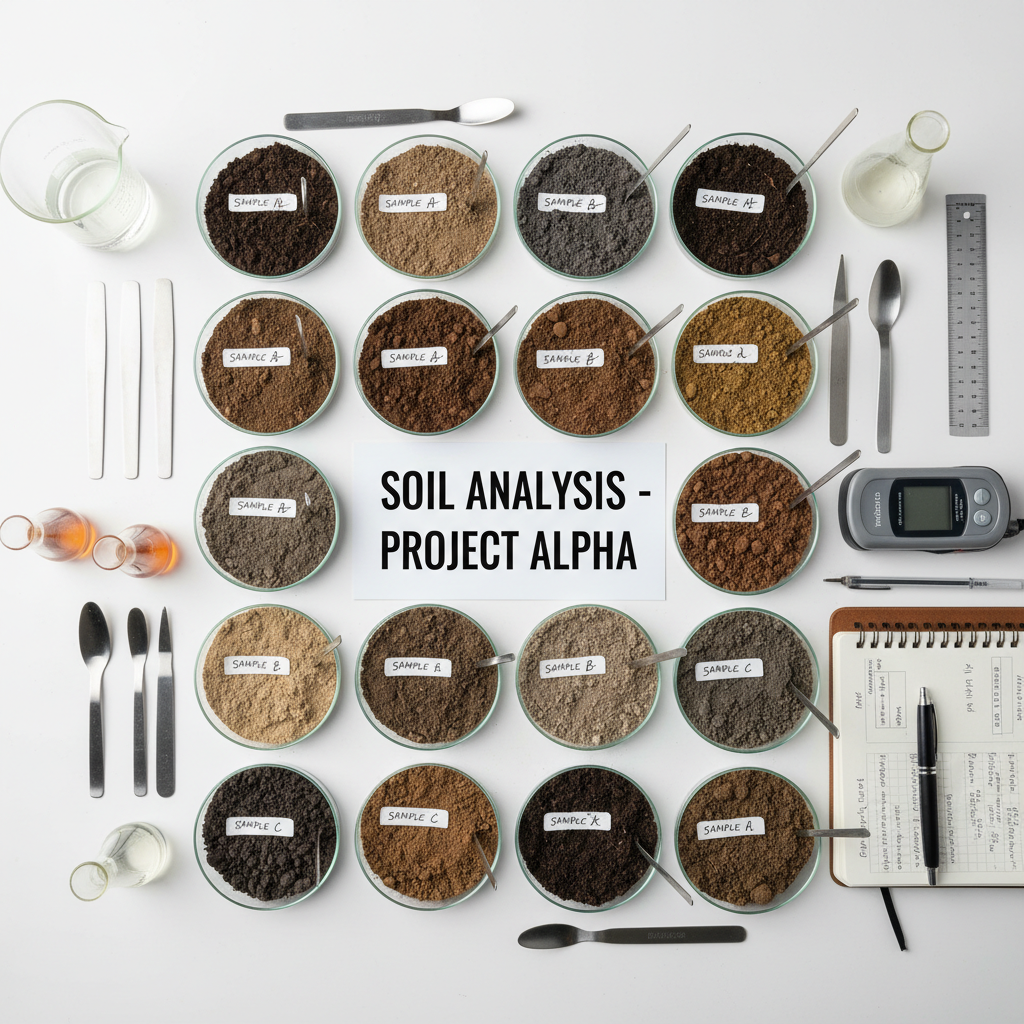
Building a strategy for a precision agriculture small farm does not require an immediate, massive capital outlay. Instead, success in Box Elder County follows a logical progression from observation to intervention. The first step involves soil mapping and zone identification. By using high resolution soil sampling, you can delineate the field based on productivity potential and water retention rather than fence lines. This diagnostic phase ensures that every subsequent investment is grounded in the actual needs of the acreage, promoting better land stewardship from the outset.
Once zones are defined, focus on affordable monitoring tools before purchasing heavy machinery. Deploying soil moisture probes and utilizing free satellite imagery allows for the collection of longitudinal data. These scalable solutions for productivity provide the data driven reasoning behind irrigation and fertilizer timing. Only after these data streams are established should you consider targeted equipment upgrades, such as retrofitting a guidance system or installing a Variable Rate Irrigation controller.
Partnering with local experts who understand the nuances of Northern Utah soils can bridge the gap between data collection and execution. Working with an operation like Anders Farming allows you to implement reliable agricultural operations without the need for an in house tech specialist. This phased approach mitigates risk while ensuring that every technology adopted serves a specific, measurable purpose on your specific land.
Addressing the Downsides: Challenges of Technology Adoption
Common concerns regarding the disadvantages of precision agriculture often center on three main friction points: capital requirements, technical complexity, and the time required for data management. For a precision agriculture small farm, the initial setup costs for high grade sensors or VRI controllers can feel prohibitive when monthly revenue is modest. Furthermore, the learning curve associated with interpreting spatial data and calibrating hardware can lead to frustration or underutilized equipment. Analyzing moisture maps and adjusting prescriptions requires hours that many owner operators simply do not have during the peak of the season.
Partnering with a specialized team to manage reliable agricultural operations effectively eliminates these barriers. By leveraging external expertise, growers gain access to scalable solutions for productivity without the need to become IT specialists or data scientists themselves. This collaborative approach ensures that the focus remains on land stewardship and crop performance while the service provider handles the technical integration, maintenance, and data interpretation necessary to drive a positive ROI. This shift allows the farmer to benefit from advanced technology without the burden of individual technical mastery.
Precision agriculture offers Utah dryland farmers a powerful way to maximize every drop of moisture and every pound of seed. While these tools can seem overwhelming at first, they provide a sustainable path forward for small scale operations. If you want expert help implementing these strategies on your own land, I am here to guide you through the process. You can read more about my approach to see how we can work together to ensure your farm thrives for generations to come.